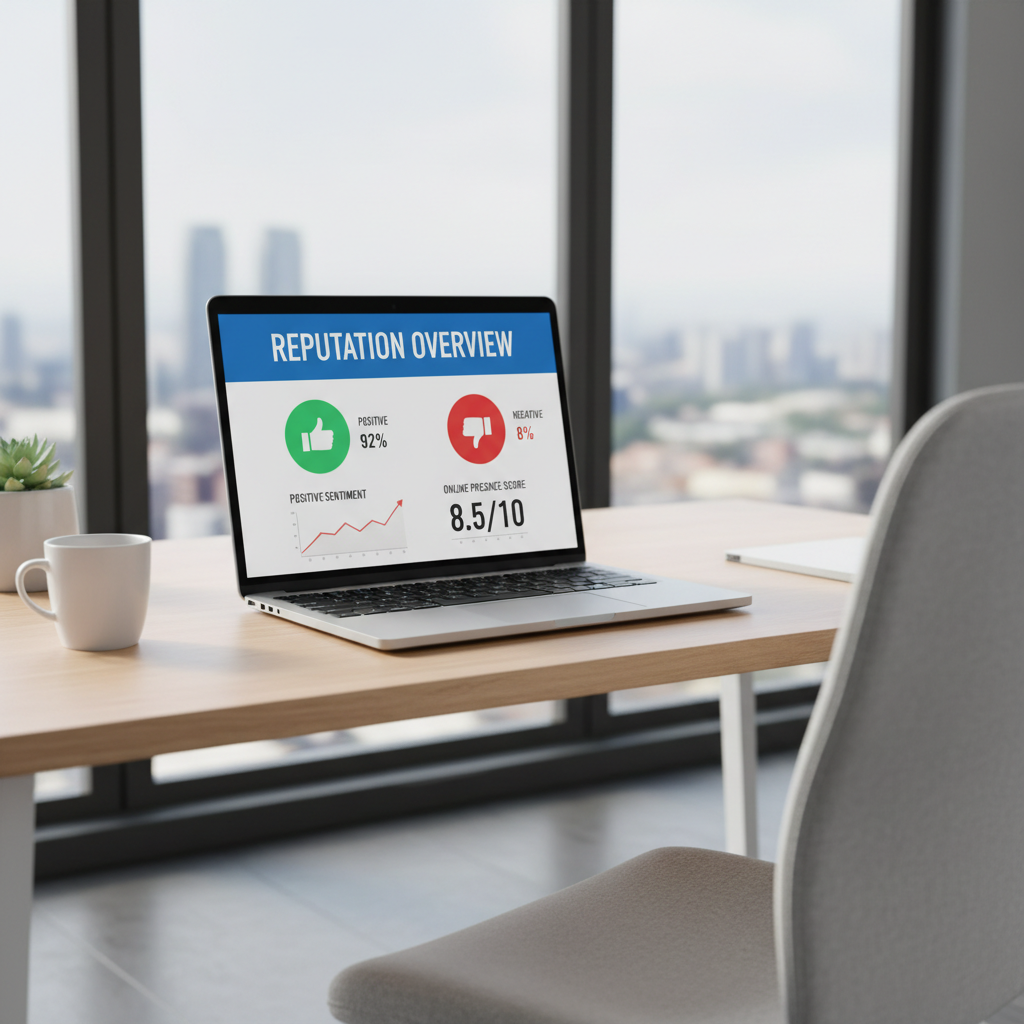
Businesses can manage reviews across 60 plus platforms by centralizing all customer feedback into a single, automated software solution. Utilizing a unified review dashboard multi-platform monitoring system allows brands to respond to feedback at scale, automate review requests, and analyze customer sentiment across every location from one interface.
Managing a reputation across sixty plus digital platforms often feels like an endless cycle of tab hopping and forgotten login credentials. When customer feedback is scattered across Google, Yelp, and industry specific sites, your team loses hours to manual data entry and risks missing critical negative sentiment. This fragmentation does more than drain productivity; it creates blind spots that can undermine your local search rankings and erode consumer trust. Modern businesses require a centralized command center to maintain control. In this deep dive, we explore how a unified review dashboard transforms multi platform monitoring from a logistical nightmare into a strategic advantage. You will learn how to consolidate global feedback into a single stream, utilize automated sentiment analysis for faster responses, and scale your reputation management across multiple locations with surgical precision.
The Chaos of Tab Hopping: Why Manual Review Management is Failing Your Business

Imagine starting your workday by cycling through a dozen open browser tabs. You check your Google Business Profile for new ratings, log into Yelp to see if a customer left a complaint, and then head to Facebook to manage recent comments. For many US small business owners, this 'tab hopping' is a daily administrative burden that consumes five to ten hours every week per location. This scattered approach is more than just a nuisance; it is a significant risk to your bottom line.
Modern consumers are meticulous researchers. Research indicates that the average customer checks 10 plus sources before making a purchase. While you might be diligent about monitoring your highest-traffic pages, a single unaddressed negative comment on a niche site like Healthgrades, TripAdvisor, or the Better Business Bureau can be a dealbreaker. To a potential client, an ignored review on a 'minor' platform suggests a lack of oversight or, worse, a business that no longer prioritizes customer service.
Relying on manual checks inevitably leads to missed feedback and inconsistent response times. When your data is fragmented across 60 plus platforms, maintaining a professional, cohesive brand voice becomes nearly impossible. This is why growth-oriented companies are shifting toward a unified review dashboard multi-platform monitoring system. By centralizing every stream of feedback into one interface, you eliminate the fatigue of context switching and ensure no customer voice goes unheard. For more information on how technology can streamline these tasks, explore AI Reputation Management to see how modern software handles the initial heavy lifting of feedback triage.
What is a Unified Review Dashboard?
A unified review dashboard multi-platform monitoring system acts as the digital mission control center for your business. At its core, this technology is a centralized software interface that utilizes Application Programming Interfaces (APIs) and data aggregators to bridge the gap between your business and 60 plus different review sites. Rather than receiving a disjointed series of emails, you see a single, chronological stream of feedback that updates in real-time. This technical consolidation means your team maintains one secure login to access every customer interaction, regardless of where it originated.
There is a critical distinction between basic review alerts and a comprehensive management dashboard. Simple alerts merely notify you that a comment exists, which often still requires you to log into the specific platform to respond. In contrast, a true management dashboard allows you to execute your entire workflow within the interface. You can reply directly to a Google Business Profile review, tag a Facebook comment for internal follow-up, and trigger automated sentiment analysis to identify recurring themes without ever leaving the page. For businesses evaluating their options, understanding Reputation Management pricing is essential to ensure the tool provides this level of bi-directional integration. This centralized approach transforms reactive monitoring into a proactive strategy. To learn more about Review Pulse 360 and how we handle these complex data streams, you can see how our infrastructure replaces manual labor with automated precision.
Is it Possible to Monitor Reviews from Every Online Platform Simultaneously?
The short answer is yes. Monitoring every online platform simultaneously is technically possible through the use of advanced data synchronization and API integrations. While global giants like Google, Facebook, and Yelp dominate the general landscape, niche sites often carry more weight for specific industries. A medical practice, for instance, cannot afford to ignore Healthgrades, just as a contractor must remain vigilant on the Better Business Bureau or HomeAdvisor.
Review Pulse 360 handles the heavy lifting by establishing direct, real-time connections with these diverse sources. Our infrastructure manages the complex logistics of data retrieval, ensuring that a review posted on a specialized professional directory appears in your feed with the same speed as a high-traffic Google rating. This technical automation removes the need for manual site-checking, a process that research shows costs marketing teams between five to ten hours per location each week. By utilizing a unified review dashboard multi-platform monitoring system, you shift the burden of technical synchronization to the software. This ensures that no feedback, regardless of the platform's size, goes unnoticed. To understand the technology behind these seamless integrations, you can learn more about Review Pulse 360 and how we consolidate over 60 sources into a single, actionable stream.
Critical Benefits of Multi Platform Monitoring for US Small Businesses

US consumers operate in a high-speed digital environment where delay is often interpreted as indifference. Research indicates that 89 percent of customers expect a business to respond to their online feedback. By implementing a unified review dashboard multi-platform monitoring system, you effectively eliminate the latency between a customer posting a review and a manager seeing it. This rapid intervention is vital for damage control; resolving a complaint within the first hour often prompts a customer to update their rating, turning a potential negative into a testimonial for your service standards.
Consistency across platforms is the second pillar of professional reputation management. When your responses are scattered across 60 plus disparate sites, your brand voice can easily become disjointed or inconsistent. A centralized system allows you to verify that every interaction reflects the same professional standards, whether the review originated on Google or a niche industry board. This prevents a fragmented brand image where a business appears attentive on one platform but neglectful on another. For owners considering the ROI of these operational improvements, reviewing Reputation Management pricing often reveals that the administrative hours saved by this consolidation far outweigh the software costs.
Finally, active engagement provides a measurable boost to local SEO. Google and other search engines prioritize businesses that demonstrate consistent activity and responsiveness across the entire web ecosystem. High engagement levels signal that a business is legitimate and operationally active, which helps improve your positioning in local search rankings. There is also a distinct competitive advantage in monitoring niche industry sites. While your competitors likely only focus on the largest platforms, your ability to be the first to respond to a negative review on a specialized directory marks you as an attentive market leader. To understand the infrastructure that makes this level of oversight possible, you can learn more about Review Pulse 360 and our approach to comprehensive data integration.
From Sentiment Analysis to Actionable Insights
Collecting data from 60 plus sources is a massive logistical win, but aggregation is only half the battle. To truly leverage a unified review dashboard multi-platform monitoring system, you must move beyond counting stars and start analyzing the "why" behind customer feedback. High quality platforms utilize sentiment analysis to distill thousands of words into actionable trends. Instead of reading every single comment manually, a manager can view a summary of recurring keywords that impact the bottom line.
For instance, the software can flag "late delivery" as an emerging trend across both major platforms and niche industry sites. Alternatively, it might highlight "friendly staff" as a consistent positive driver. These are not just labels; they are operational data points. In a modern US office environment, this intelligence allows leadership to move from anecdotal evidence to data driven decision making. If a specific branch sees a 20 percent spike in keywords related to "wait times," the regional manager can address staffing levels before the trend damages the brand's overall rating.
This granular insight is invaluable for staff training and performance reviews. Rather than relying on a single disgruntled customer's account, you can show employees aggregated feedback that proves a pattern of behavior. This objective approach turns the AI Reputation Management process into a tool for continuous improvement. By closing the loop between what a customer says on a niche forum and how you train your front line team, you ensure your business evolves based on real world requirements rather than guesswork. To see how these insights integrate with your budget, you can review our Reputation Management pricing for tiered data analysis options.
Managing Multiple Locations without Losing Your Mind

Scaling a business introduces a geometric increase in complexity. For an organization with 50 locations, manual oversight becomes physically impossible; research indicates marketing teams often lose five to ten hours per week per location just attempting to track feedback. A unified review dashboard multi-platform monitoring system solves this by providing a hierarchical view of the brand. Regional managers can access a high level heat map of sentiment across the entire territory, while local store managers are restricted to the feed for their specific branch. This structure ensures accountability without overwhelming local teams with corporate data.
Operational excellence in a multi-location model relies on tiered escalation. For example, if a negative review is posted regarding the San Diego branch and remains unaddressed for 24 hours, the system automatically flags the incident to the corporate reputation team. This safety net prevents localized issues from spiraling into brand-wide PR crises. By setting these internal benchmarks, you ensure that every location maintains the same standard of service. Businesses looking to implement these sophisticated workflows can find more details about Review Pulse 360 and how our software supports multi-user permissions and regional reporting. This centralized oversight is often the difference between a fragmented brand and a cohesive, market leading presence. Reviewing Reputation Management pricing can help you determine the right tier for your organization's footprint.
Best Practices for Responding at Scale via a Single Dashboard
Scaling your response strategy requires a precise balance between automation and authentic engagement. Within a unified review dashboard multi-platform monitoring system, start by deploying AI agents like Alex to handle initial triage. This allows you to categorize incoming feedback instantly, separating technical complaints from general praise. For more details on this process, explore AI Reputation Management. For common inquiries, utilize pre-built response templates to maintain speed, but always insert personal details such as the customer’s name or specific visit date. Research shows that 89 percent of consumers expect a response, yet they can easily spot a generic, copy-pasted reply.
To maintain high standards, follow these specific guidelines: - Personalize the first and last sentence of every template. - Use the dashboard’s internal tagging to route complex issues to subject matter experts. - Set a goal for a two hour response window for negative feedback.
Even when using high-tech tools to manage 60 plus sources, the human touch remains your most valuable asset. If you are curious about the technical infrastructure that supports these workflows, you can learn more about Review Pulse 360. For organizations looking to optimize their operational overhead while maintaining this level of care, comparing Reputation Management pricing will help align your strategy with your budget.
Centralizing your review management across more than sixty platforms is the most effective way to protect your online reputation. By using a single dashboard, you ensure that no customer feedback is overlooked; however, managing these tools effectively requires consistent attention. If you want expert help navigating the setup or maintaining your presence, Review Pulse 360 offers tailored solutions. Please visit our Pricing page to explore the options that fit your business needs. We make it simple to stay connected with your audience everywhere.