
To master how to respond to negative reviews by industry, businesses must provide personalized apologies that acknowledge specific customer concerns and accept responsibility for any shortcomings. Successful responses involve tailoring the tone to specific sectors like hospitality or retail, followed by an invitation to resolve the matter through private communication channels. This strategic approach helps recover unhappy customers while demonstrating a commitment to service excellence for prospective clients.
Watching a one-star review surface on your business profile can feel like a direct hit to the reputation you have spent years building. While your first instinct might be to react defensively, the modern consumer expects a response that is both immediate and calibrated to your specific field. A generic apology that works for a coffee shop can be a legal liability for a medical practice or a financial firm. In this comprehensive guide, we move beyond basic templates to provide industry-specific strategies for reputation management. You will discover how to navigate HIPAA constraints in healthcare, maintain professional decorum in legal services, and win back disgruntled guests in the hospitality sector. We also address the nuances of handling non-customer feedback and the delicate balance of using automation to scale your responses without sacrificing a human connection.
The Universal Framework for Professional Responses

A single negative review can feel like a setback, but it is actually a high-stakes opportunity to demonstrate your commitment to customer service. Statistics show that 94% of consumers have avoided a business specifically because of a negative review. However, the narrative changes when you engage; 45% of consumers are actually more likely to visit a business that responds to negative feedback. While different sectors require specific nuances, understanding how to respond to negative reviews by industry starts with a universal framework of professional engagement.
The first golden rule is to address the reviewer by name. This immediately humanizes the interaction and signals that the complaint is being handled with individual care rather than a generic script. Second, express genuine gratitude for the feedback. Even if the critique feels unfair, thank the customer for taking the time to share their perspective. Third, provide a sincere apology for the experience. Finally, move the conversation to a private channel. Provide a direct phone number or email address and offer to resolve the issue away from the public eye.
It is vital to remember that your response is primarily for future customers, not just the original reviewer. You are writing for the hundreds of prospective clients who will read that exchange later. When they see a professional, calm, and proactive response, they gain confidence in your business's integrity. Managing this process efficiently across dozens of platforms often requires robust reputation management software to ensure no feedback goes ignored. By following these foundational steps, you transform a potential PR liability into a public demonstration of your values.
Healthcare and Dental: Navigating Privacy and HIPAA
These foundational steps must be applied with extreme caution in the healthcare and dental sectors; here, privacy is not just a courtesy but a legal mandate. Healthcare professionals operate under a strict regulatory environment where a misstep in a public forum can lead to severe HIPAA violations. While learning how to respond to negative reviews by industry often emphasizes high levels of personalization, medical contexts require a more disciplined, generalized approach. Federal law prohibits the disclosure of Protected Health Information (PHI), which includes the simple act of confirming that an individual was even a patient at your practice.
To remain compliant, you must avoid acknowledging the reviewer’s status as a patient. Instead of saying, "We are sorry you had a bad experience during your appointment," focus on your office's general standards and commitment to care. This protects the practice while signaling to the public that you take feedback seriously. Utilizing professional reputation management software can help you monitor these sensitive interactions and ensure your staff follows a compliant protocol consistently.
Use the following template to maintain professionalism without risking legal exposure:
Thank you for sharing your feedback. Our practice is dedicated to providing high-quality care and maintaining the highest standards for all visitors. Due to federal privacy regulations, we cannot discuss specific details or confirm treatment history in a public forum. We would appreciate the opportunity to learn more about your experience directly. Please contact our office manager at [Phone Number] so we can address your concerns.
Professional Services: Legal and Financial Firm Responses
Legal and financial firms must adopt a similar level of restraint, though the risks here often involve professional liability and the preservation of institutional objectivity. A common concern for these sectors is how to respond professionally when a public grievance appears to challenge their expertise. In these instances, your response serves as a testament to your temperament. For lawyers and financial advisors, being overly defensive can damage the firm’s reputation for impartiality; if you cannot remain objective in a Google review, a prospective client may worry you cannot remain objective in a courtroom or during a market downturn.
Confidentiality is the cornerstone of professional services. When determining how to respond to negative reviews by industry, legal and financial practitioners must prioritize secure channels over public debate. You should never confirm the existence of a specific client relationship or discuss the particulars of a case or portfolio. Utilizing reputation management software can help your firm track these interactions and ensure that every reply adheres to your internal compliance standards. Shift the conversation immediately to a private, secure environment with a neutral statement:
Thank you for your feedback. We maintain a strict policy of confidentiality regarding all client matters and professional engagements, which prevents us from addressing specific details in this forum. However, we take all concerns seriously. We invite you to contact our firm directly at [Phone/Email] to discuss this matter through the appropriate, secure channels.
Home Services: HVAC, Plumbing, and Landscaping
Home services like HVAC, plumbing, and landscaping require a strategy that balances technical accountability with local community presence. When considering how to respond to negative reviews by industry, tradespeople should focus on the specific service guarantees that differentiate them from national competitors. If a homeowner complains that a repair failed or a technician arrived late, your response should reference your specific "Fixed Right or It’s Free" policy or your punctuality guarantee. This moves the conversation from a vague apology to a demonstration of your professional standards.
Unlike the generic templates used by national chains, local businesses can leverage these responses to boost local SEO and community trust. Mentioning specific neighborhoods, such as noting that your team has served the West End or the Hill Country area for years, builds immediate credibility with neighbors. This level of specificity signals to prospective customers that you are a vested member of their community rather than a distant corporation.
To manage these location-specific interactions effectively, many successful trades utilize reputation management software to track feedback across dozens of service platforms. By addressing technical complaints with specific solutions and localized details, you reinforce your brand’s reliability and geographical expertise. This approach ensures that a single bad service call does not overshadow years of dedicated local work.
Restaurants and Hospitality: Winning Back the Guest
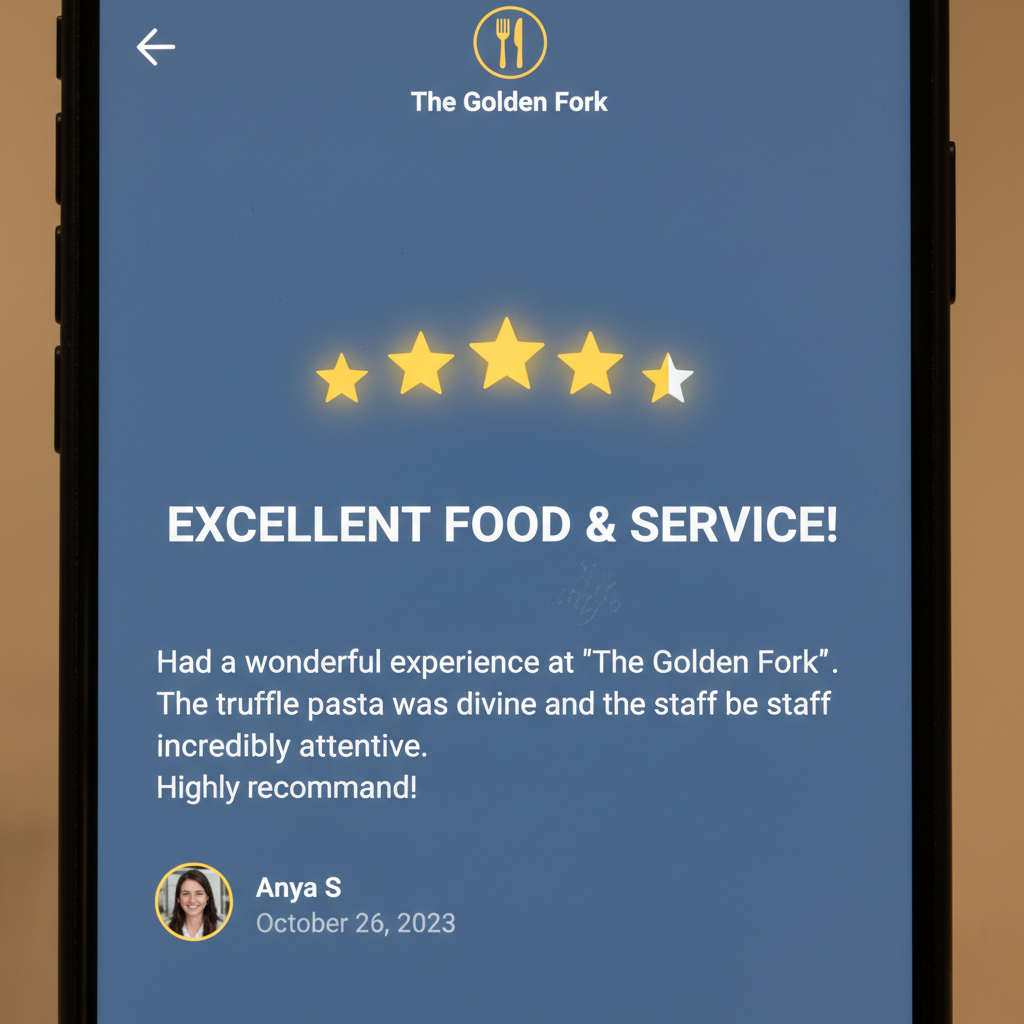
In the dining and hospitality sector, timing is as critical as the temperature of the dish. Guests often post reviews while their experience is still fresh, so aiming for a response within 24 to 48 hours is essential. When mastering how to respond to negative reviews by industry, it is important to categorize the feedback correctly. Sensory complaints regarding food quality, like an overcooked steak or a cold side dish, require a different tone than operational complaints about service speed. For food issues, emphasize your kitchen’s commitment to freshness and technique. For service delays, acknowledge the specific tempo of the evening and any logistical hurdles without making excuses.
Winning back a guest usually requires a second chance offer. To ensure this does not look like a bribe for a review change, focus on the relationship rather than the transaction. Invite the guest back so you can provide the experience you are known for, rather than offering a free meal specifically in exchange for a rating adjustment. Using reputation management software helps hospitality teams monitor these interactions across multiple platforms and identify recurring issues in the kitchen or front of house. By treating the response as a hospitality extension, you demonstrate to all potential diners that you prioritize their satisfaction over your public score.
How to Respond to Negative Reviews from People who Were Not Customers
Occasions arise where you receive a scathing review from someone who never actually used your services. Spotting these ghost reviewers involves looking for accounts with no profile photo, no previous review history, or vague complaints that lack specific details like dates, order numbers, or staff names. When determining how to respond to negative reviews by industry, the protocol for unverified interactions must be firm yet professional.
Rather than making accusations, state clearly that you have no record of their transaction or visit. This approach is effective because it signals to platforms like Google and Yelp that the review may be illegitimate, facilitating a potential removal request later. It also shows future customers that you maintain rigorous records and value accuracy. Use a response like this:
We take all feedback seriously, but we cannot find a record of a client or transaction matching your description in our database. We would like to investigate this further; please contact us at [Email/Phone] with your service date so we can address your concerns.
By inviting them to provide details privately, you expose the lack of evidence without appearing aggressive. Utilizing reputation management software can help you flag these suspicious patterns across multiple platforms before they impact your overall rating.
What to do When the Customer is Wrong
Occasionally, a review is not from a bot or a fake account, but from a genuine customer whose account of events is factually incorrect. When determining how to respond to negative reviews by industry, the instinct to vigorously defend your business is natural. However, becoming defensive or aggressive ruins your professional image for the hundreds of prospective clients watching the exchange. The most effective approach is to kill them with kindness. Your goal is not to win an argument with one person, but to demonstrate your brand's temperament to every future reader.
Guide the reader through the facts clearly and calmly without assigning blame. Instead of stating that a reviewer is lying, use a phrase like "it sounds like there may have been a misunderstanding of our policy." This allows you to correct the record while remaining the most reasonable person in the digital room. If a client complains about a service charge that was clearly disclosed, restate the standard procedure as a general rule rather than a personal attack. Utilizing reputation management software can help you draft these responses in a neutral environment, ensuring your tone stays professional even when the feedback is frustrating. This strategy transforms a factual error into a showcase of your commitment to clarity and customer education.
Automating Your Response Strategy Without Losing the Human Touch

Executing these specialized strategies becomes a logistical hurdle as your business grows. Monitoring feedback across Google, Yelp, Facebook, and niche sites like Healthgrades or Angi is time consuming; it often leads to missed messages or delayed replies. Review Pulse 360 simplifies this by centralizing feedback from over 60 platforms into a single, intuitive dashboard. This allows you to implement a consistent strategy for how to respond to negative reviews by industry without the need to log into dozens of different accounts every day.
The secret to scaling your reputation management without sounding like a robot is the balanced use of templates. Using pre-approved frameworks ensures your tone remains professional and compliant with specific regulations, such as HIPAA for medical practices or confidentiality rules for legal firms. We recommend an "80/20" rule: use a carefully crafted template for 80% of the response to maintain consistency, then add 20% personalization by referencing a specific detail from the customer's comment.
This hybrid method protects your schedule while proving to the reader that a real person is addressing their concerns. For businesses that are too busy to monitor every site but care deeply about their public standing, our reputation management software provides the perfect middle ground. You can review our pricing for review monitoring to find a plan that matches your volume, ensuring that every piece of feedback is handled with the speed and human touch it deserves.
Managing negative reviews is about more than just damage control; it is an opportunity to showcase your brand values through industry-specific strategies. By responding with empathy and speed, you can turn frustrated customers into loyal advocates. If you find that keeping up with these interactions is becoming a challenge, you might benefit from having a dedicated team handle the heavy lifting. If you want expert help to manage your online reputation effectively, please feel free to explore our Pricing page for a solution that fits your business needs.