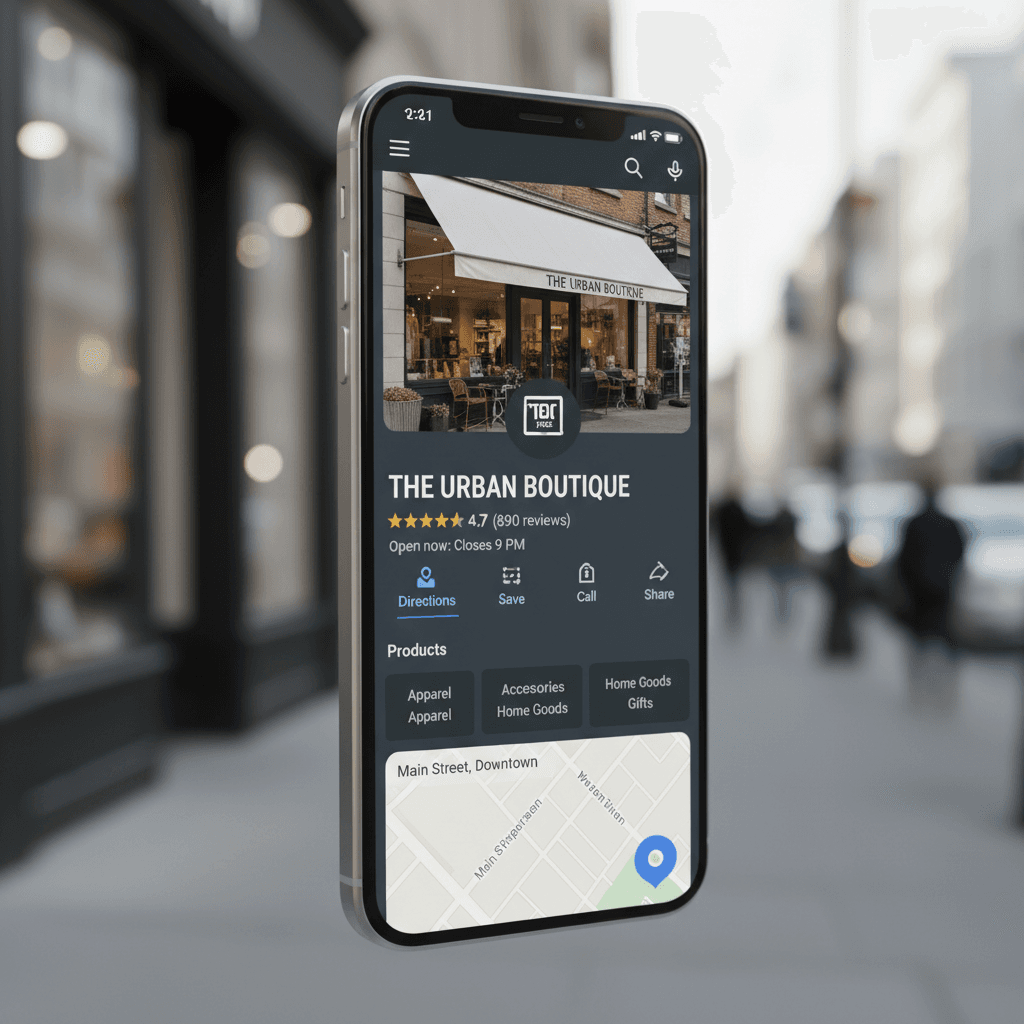

Online reviews drive financial growth by boosting consumer trust, enhancing search visibility, and directly increasing conversion rates. Understanding how reviews increase revenue for small business is vital since a one-star improvement can lift earnings by 5 to 9 percent; additionally, highly rated companies attract customers who are willing to spend significantly more on quality services.
Many small business owners watch their marketing budgets vanish while high-quality leads remain elusive. You are likely tired of competing on price alone against larger competitors with deeper pockets. Your online reputation is not just a digital trophy case; it is the most potent driver of conversion and pricing power in the modern market. Positive reviews act as a silent sales force that justifies premium rates and builds immediate trust before a prospect even speaks to you. In this guide, we will analyze the direct link between star ratings and your bottom line. You will learn how a strong feedback loop generates a 270 percent conversion lift, improves your local SEO standing, and transforms your public reputation into a predictable revenue engine.
The Direct Connection Between Star Ratings and Your Bottom Line
Quantifying the financial impact of customer feedback often feels subjective, but the data proves that star ratings directly dictate cash flow. A landmark study from Harvard Business School by Professor Michael Luca analyzed independent businesses and determined that a one star increase in a Yelp rating leads to a 5 to 9 percent increase in revenue. For a small business navigating the competitive landscape of Philadelphia, these percentages translate to tangible outcomes. It is often the primary factor that determines if a service team has a fully booked schedule or a quiet shop.
The relationship between stars and sales is even more pronounced when looking at capacity. Research indicates that businesses with a 4 star rating are 27 percent more likely to sell out their services or inventory compared to those sitting at 3.5 stars. This threshold is critical because it represents a psychological shift in consumer trust. For a local contractor or restaurant, hitting that 4 star mark is the difference between struggling for leads and having a waitlist.
However, the risk of neglecting reputation management is equally stark. While a one star gain boosts the bottom line, a one star drop can trigger an immediate 9 to 12 percent revenue decline. For a business in Center City or Manayunk, this volatility makes automated review requests an operational necessity rather than a marketing luxury. When you understand how reviews increase revenue for small business, you stop viewing them as mere comments and start treating them as financial assets. Monitoring these shifts through a free reputation report allows owners to identify these revenue risks before the loss becomes permanent.
Why Reviews Attract Higher-Margin Leads and Reduce Price Sensitivity

While the volume of transactions dictates your top-line growth, the quality of those transactions determines your actual profitability. Many Philadelphia business owners fall into the trap of competing solely on price, unaware that their online reputation is the primary lever to escape a race to the bottom. High-quality reviews shift a prospect's focus from the lowest cost to the highest reliability, effectively filtering for leads who value results over discounts.
Data indicates that consumers are willing to spend 31 percent more at businesses with excellent reviews. This is a foundational element of how reviews increase revenue for small business; they provide a price premium that lower-rated competitors simply cannot command. This phenomenon functions as "trust insurance." When a homeowner in Chestnut Hill or a business owner in Center City evaluates a service provider, a 4.8-star rating serves as a psychological guarantee. The potential customer is essentially paying for the reduced risk of a poor outcome, a botched project, or a wasted afternoon.
Rating Impact | Customer Perception | Pricing Power |
|---|---|---|
3.0 - 3.5 Stars | High Risk / Price Driven | Minimal; must discount to win |
4.0 - 4.4 Stars | Moderate Trust | Standard market rates |
4.5 - 5.0 Stars | Low Risk / Premium Value | 22% - 31% Price Premium |
When a prospect trusts your ability to deliver, they stop cross-referencing your quotes against every other provider in the tri-state area. By utilizing tools like Review Tap 360 to capture positive feedback at the moment of peak customer satisfaction, you build a public record that justifies higher margins. This allows your team to focus on delivering exceptional work for clients who aren't fixated on the bottom dollar, creating a more sustainable and profitable business model.
The 270 Percent Conversion Lift: Turning Searchers into Customers

Once you have established premium pricing, the next hurdle is conversion. Many Philadelphia business owners confuse reach with results. While search engine optimization ensures your name appears when someone searches for a local provider, visibility alone does not generate revenue. This is where the distinction between being found and being hired becomes critical. According to data from the Spiegel Research Center, the purchase likelihood for a business with just five reviews is 270 percent higher than one with zero reviews. This confirms that the initial handful of reviews acts as a primary catalyst for financial growth.
For high-stakes, service-based teams in sectors like HVAC, plumbing, or legal services, this effect is even more pronounced. When the cost of the service increases, so does the customer’s perceived risk. The Spiegel data highlights that for higher-priced items and services, the conversion lift from online reviews jumps to 380 percent. In a market like Philadelphia, where a homeowner might spend thousands on a new furnace or a business owner might invest heavily in professional consultations, these social proof markers are the ultimate deciding factor.
Service Type | Conversion Lift (with reviews) |
|---|---|
Low-Priced Products/Services | 190% Increase |
High-Priced/High-Risk Services | 380% Increase |
Baseline (First 5 Reviews) | 270% Increase |
This demonstrates exactly how reviews increase revenue for small business; they bridge the gap between curiosity and a signed contract. Without automated review requests to ensure a steady stream of feedback, a business might rank at the top of the search results but consistently lose the job to a competitor with a documented history of success. The first five reviews provide the highest marginal benefit, transforming a dormant profile into a high-performance conversion machine.
Local SEO as a Revenue Engine: The Map Pack Advantage
A high conversion rate only generates profit if prospects find your business first. For Philadelphia service providers, visibility is synonymous with the Google Local Pack. Review signals, specifically velocity, recency, and diversity, are now primary ranking factors that determine who appears in those coveted top three map spots. If a company fails to appear when a homeowner searches for a plumber in Chestnut Hill or an electrician in Center City, they are effectively handing revenue to competitors who are actively managing their digital footprint.
Google’s algorithm prioritizes businesses that show a consistent stream of new feedback. This makes automated review requests essential for maintaining ranking momentum. Furthermore, the search interface often defaults to a "Top Rated" filter, which can lead to a 70 percent loss in potential customers for any business with a rating below 4 stars. When Google filters out lower-rated options, those businesses disappear from the searcher's view entirely.
Ranking Factor | Impact on Visibility | Business Requirement |
|---|---|---|
Review Velocity | High | Constant flow of new feedback |
Review Recency | Critical | Reviews must be less than 90 days old |
Rating Threshold | Maximum | Must stay above 4.0 to avoid filters |
This visibility gap illustrates exactly how reviews increase revenue for small business; they function as a beacon for local search algorithms. Owners can assess their current standing and identify where they are losing ground to local rivals by requesting a free reputation report, ensuring they don't remain invisible to the most motivated local leads.
Turning Reviews into a Lead Generation System
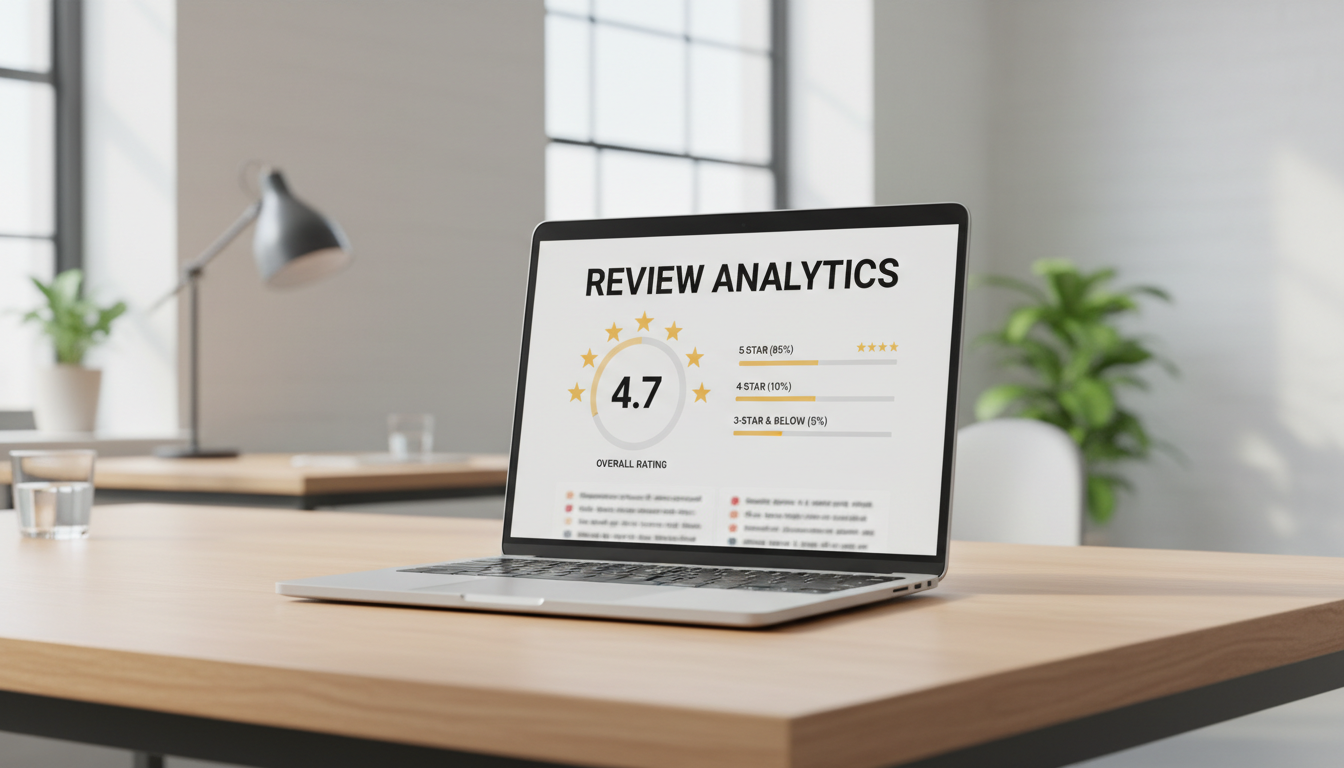
Securing visibility in the Local Pack is only half the battle; the next step is transforming that visibility into a lead generation machine. By treating customer feedback as a dynamic marketing asset rather than a static archive, Philadelphia businesses can proactively capture interest. Integrating Review Pulse 360 widgets directly onto your service pages allows you to display live social proof at the exact moment a prospect is deciding whether to call. This placement reduces friction, providing the final nudge needed for a homeowner in Manayunk to request a quote.
This strategy initiates a virtuous cycle that compounds revenue over time. Higher review volume improves your local search ranking, which attracts more qualified leads. As these leads convert into customers, automated review requests capture their satisfaction, feeding the cycle once again. This creates a self-sustaining growth engine where your reputation does the heavy lifting for your sales team. The more feedback you collect, the more Google trusts your business, leading to even greater search prominence.
To maintain this momentum in 2026, manual outreach is no longer viable for busy service based teams. The volume required to stay ahead of Center City competitors necessitates a systematic approach. Utilizing SMS and email via Review Tap 360 ensures that you are reaching customers while their positive experience is fresh. Businesses that fail to automate this process often see their review velocity stall, leading to a slow decline in lead quality. You can evaluate your current lead generation potential by checking your standings with a free reputation report, identifying exactly where your feedback loop needs strengthening.
Protecting Revenue Through Active Review Monitoring and Responses
Maintaining a high-performing reputation requires shifting from a passive stance to active monitoring. A common question for Philadelphia business owners is exactly how many reviews are necessary to see a return. While the most significant leap in purchase likelihood occurs within the first 5 to 10 reviews, quantity alone is a decaying asset. Recency is the metric that truly protects your cash flow. If your latest feedback is from six months ago, a prospect in Society Hill may assume your service quality has slipped. Stale profiles create doubt, which is why consistent, automated review requests are required to keep your digital storefront relevant.
Beyond just gathering feedback, how you manage the dialogue determines your closing rate. Research shows that 44 percent of consumers are unlikely to hire a business that fails to respond to its reviews. Ignoring a customer, whether the feedback is glowing or critical, signals a lack of professional oversight. This is a critical component of how reviews increase revenue for small business; engagement proves the business is operational and cares about its client experience.
Review Age | Consumer Trust Level | Impact on Revenue |
|---|---|---|
0 - 3 Months | High | Maximum conversion; validates current quality |
3 - 6 Months | Moderate | Trust begins to erode; potential leads hesitate |
6+ Months | Low | High risk of lead abandonment; perceived inactivity |
For service teams managing multiple jobs across the Delaware Valley, manual responding is often the first task to fall through the cracks. AI-powered response tools solve this by generating personalized, professional replies in seconds, allowing you to maintain an active presence without sacrificing your billable hours. This technology ensures that every lead sees an attentive business that values its community. You can see how your current response rate and recency compare to local benchmarks by generating a free reputation report to identify potential revenue leaks.
Ultimately, your online reputation is more than just a collection of comments. It is a powerful financial asset that directly impacts your bottom line by attracting higher quality leads. While these strategies provide a solid foundation for growth, managing every detail of your brand image requires consistent effort. If you want expert help to maximize your digital presence, you can start by viewing your custom Reputation Report. Taking this next step ensures your business remains competitive and profitable.